


Training with power is the single biggest upgrade you can make to your cycling. But with pedal-based, crank-based, and spider-based options — plus single-sided vs dual-sided, Look vs SPD compatibility — choosing the right power meter can feel overwhelming. This guide cuts through the noise so you can train smarter from day one.
Why Train with Power?
Unlike heart rate, power is instantaneous and objective. It tells you exactly how hard you're working right now — not 30 seconds ago. Whether you're targeting a FTP improvement, pacing a sportive, or following a structured training plan, a power meter gives you the data to train with precision and race with confidence.
Types of Power Meters: Where Is the Sensor?
Power meters measure the force you apply to the drivetrain. The location of the sensor determines accuracy, convenience, and bike compatibility.
Pedal-Based Power Meters
The sensor lives inside the pedal body. This is the most popular choice for cyclists who own multiple bikes — you simply move the pedals between bikes in minutes with no tools beyond a pedal wrench.
Best for: Riders with more than one bike, those who travel frequently, or anyone who wants a plug-and-play setup without touching the drivetrain.
Key consideration: Pedal-based meters are cleat-system specific. You must choose a pedal that matches your shoes' cleats — Look Kéo or SPD-SL for road, SPD for MTB/gravel.
Crank Arm Power Meters
The strain gauge is built into one or both crank arms. These are more bike-specific but offer excellent accuracy and are often more affordable than pedal-based options at the entry level.
Best for: Riders committed to a single bike who want to keep their existing pedal system.
Spider-Based Power Meters
The sensor sits in the chainring spider at the centre of the crankset. These tend to be the most accurate (measuring at the true power transfer point) but are the least portable and most drivetrain-specific.
Best for: Performance-focused riders on a dedicated race bike who prioritise accuracy above all else.
Single-Sided vs Dual-Sided: Does It Matter?
A single-sided power meter measures one leg (typically the left) and doubles the reading to estimate total power. A dual-sided meter measures both legs independently.
Single-Sided
- Lower cost
- Lighter weight
- Accurate enough for the vast majority of training and racing
- Assumes a 50/50 left-right power balance
Dual-Sided
- Measures true left and right power independently
- Provides left/right balance data — useful for identifying imbalances during injury rehab or bike fitting
- Higher cost, but the data is genuinely actionable for serious athletes
Our recommendation: For most cyclists, a single-sided meter is more than sufficient. If you're working with a coach, recovering from injury, or optimising your bike fit, the left/right data from a dual-sided unit is worth the premium.
Clipless Pedal Compatibility: Look vs SPD
This is the most common source of confusion when buying a pedal-based power meter. You must match the pedal to your cleat system.
Look Kéo vs Shimano SPD-SL (Road)
Both are three-bolt road cleat systems that attach to stiff-soled road shoes, but they are not interchangeable. Look Kéo cleats need a Look-compatible pedal (Assioma UNO/DUO or PRO RL). Shimano SPD-SL cleats need an SPD-SL pedal (Assioma PRO RS). Check the brand printed on your cleats before you buy.
SPD (Mountain Bike / Gravel)
Two-bolt cleats that recess into the shoe sole, allowing you to walk normally. Standard for MTB, gravel, and commuting. If your shoes have recessed two-bolt cleats, you need an SPD-compatible power meter pedal.
The Favero Assioma Range: Our Top Recommendation

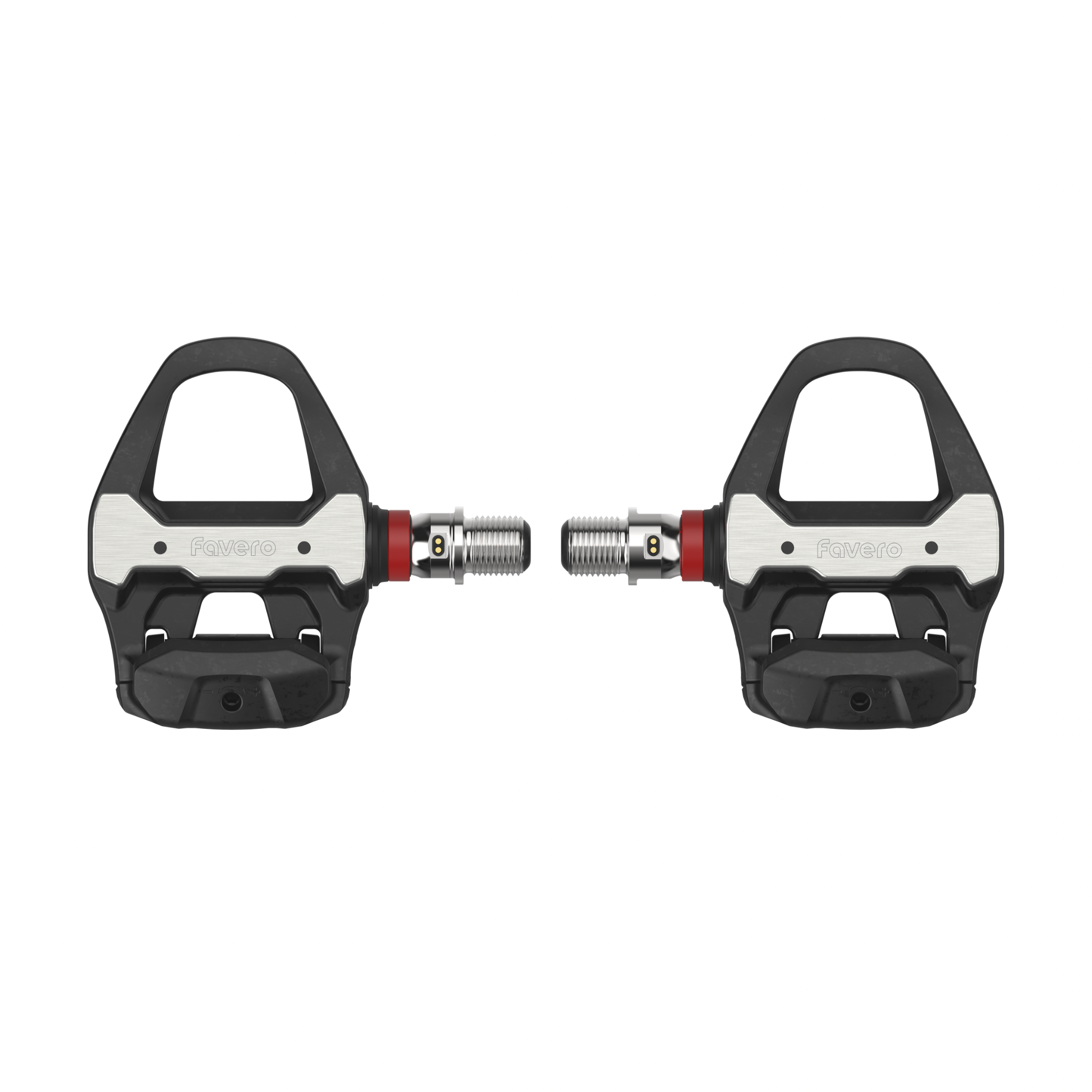
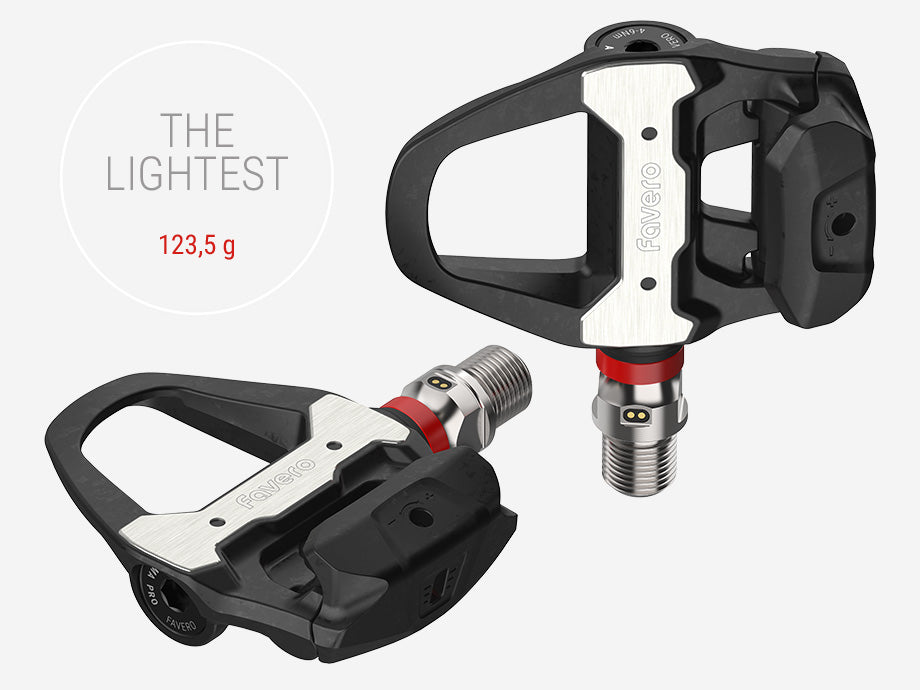
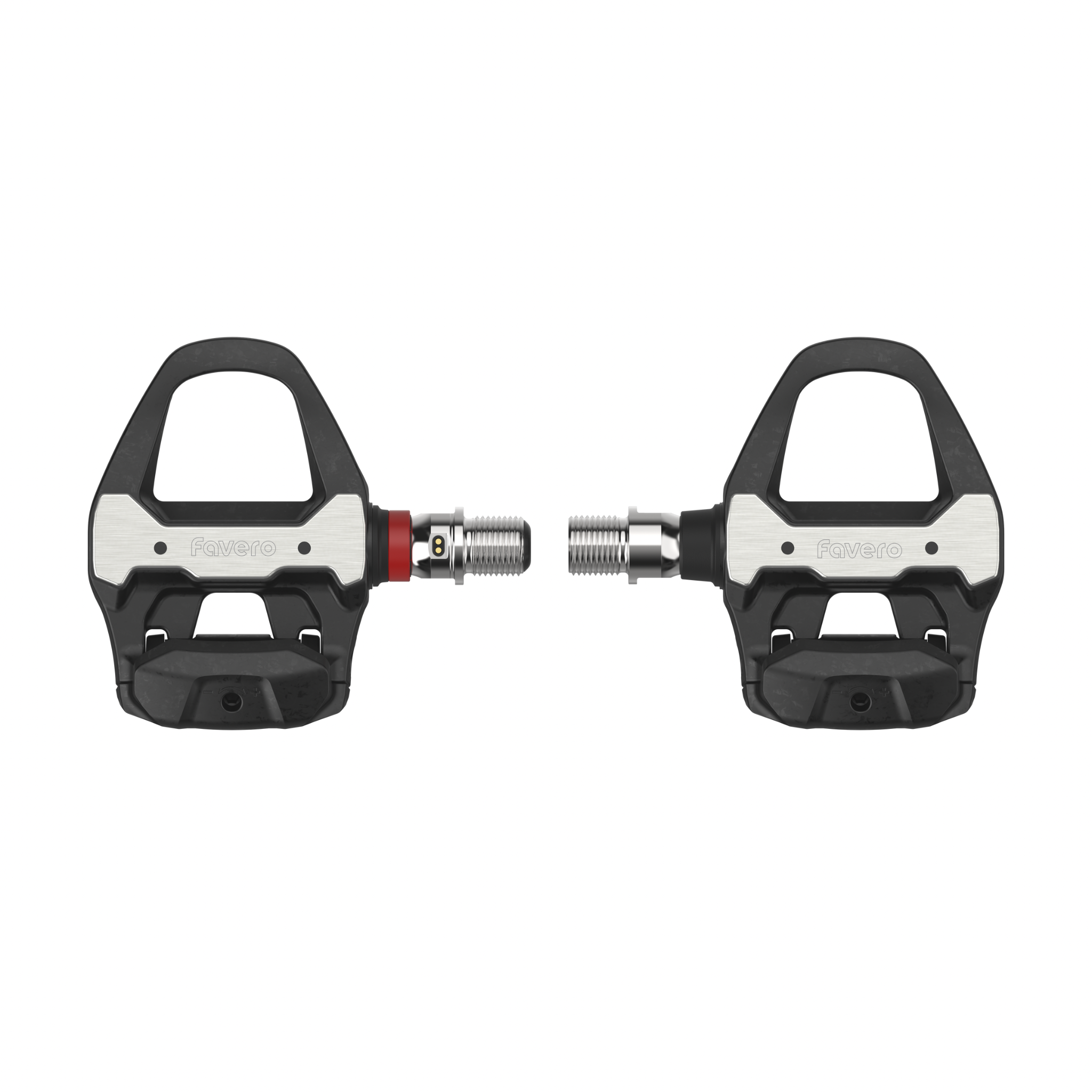
Favero Assioma pedals are the benchmark for pedal-based power meters — trusted by cyclists worldwide. They combine exceptional accuracy (±1%), long battery life (50+ hours on UNO/DUO, 160+ hours on the PRO range), and seamless ANT+/Bluetooth connectivity with Garmin, Wahoo, and all major head units.
Assioma PRO RS — Road, Shimano SPD-SL
The PRO RS is Favero's road power meter pedal for Shimano SPD-SL cleats, and the lightest in the Assioma range. USB-C charging, 160+ hours per charge. Available in single-sided (PRO RS1) and dual-sided (PRO RS2) configurations.
→ Shop the Favero Assioma PRO RS
Assioma PRO RL — Road, Look Kéo
The PRO RL is the Look Kéo version of the PRO platform: 130 g per pedal, adjustable release tension, USB-C charging and 160+ hours per charge. It shares the same spindle as the PRO RS and PRO MX. Available in single (PRO RL1) and dual-sided (PRO RL2) versions — the upgrade path for Look riders coming from UNO/DUO.
→ Shop the Favero Assioma PRO RL
Assioma PRO MX — MTB & Gravel, SPD-Compatible
The PRO MX brings Assioma accuracy to off-road riding. SPD-compatible and built to handle mud, gravel, and trail conditions. Available in single (PRO MX1) and dual-sided (PRO MX2) versions.
→ Shop the Favero Assioma PRO MX
Assioma UNO & DUO — Classic Road Series
The original Assioma range remains an outstanding choice for road cyclists on a budget. Look Kéo-compatible, with the UNO (single-sided) and DUO (dual-sided) offering the same ±1% accuracy at a more accessible price point.
→ Shop the Favero Assioma UNO & DUO
Quick Decision Guide
| Your Situation | Recommended Model |
|---|---|
| Road bike, Look Kéo cleats, budget-conscious | Assioma UNO (single) or DUO (dual) |
| Road bike, Shimano SPD-SL cleats | Assioma PRO RS1 or PRO RS2 |
| Road bike, Look Kéo cleats, want USB-C and 160+ hr battery | Assioma PRO RL1 or PRO RL2 |
| MTB or gravel, SPD cleats | Assioma PRO MX1 or PRO MX2 |
| Multiple bikes, want portability | Any Assioma pedal — move between bikes in minutes |
| Injury rehab or bike fitting focus | Any dual-sided model (DUO, PRO RS2, PRO RL2, PRO MX2) |
What About Head Unit Compatibility?
All Favero Assioma pedals broadcast over both ANT+ and Bluetooth simultaneously, making them compatible with every major cycling computer — Garmin Edge, Wahoo ELEMNT, Hammerhead Karoo, Bryton, and more. They also connect directly to Zwift, TrainerRoad, and other training apps via Bluetooth.
Ready to Train with Power?
Browse our full range of power meter pedals — including the complete Favero Assioma lineup — available with local Singapore stock and fast shipping across Southeast Asia.
Have questions about which model suits your setup? Drop us a message — we're cyclists too, and we're happy to help you choose.
Written by Sunil S, a hobby cyclist based in Singapore.

